

Find us on Instagram


Join our subscribers list to get the latest news, updates and special offers.
Testimonial & Confessional Video Booths: One Activation, Two Content Pipelines
August 15, 2026
Testimonial & Confessional Video Booths: One Activation, Two Content Pipelines
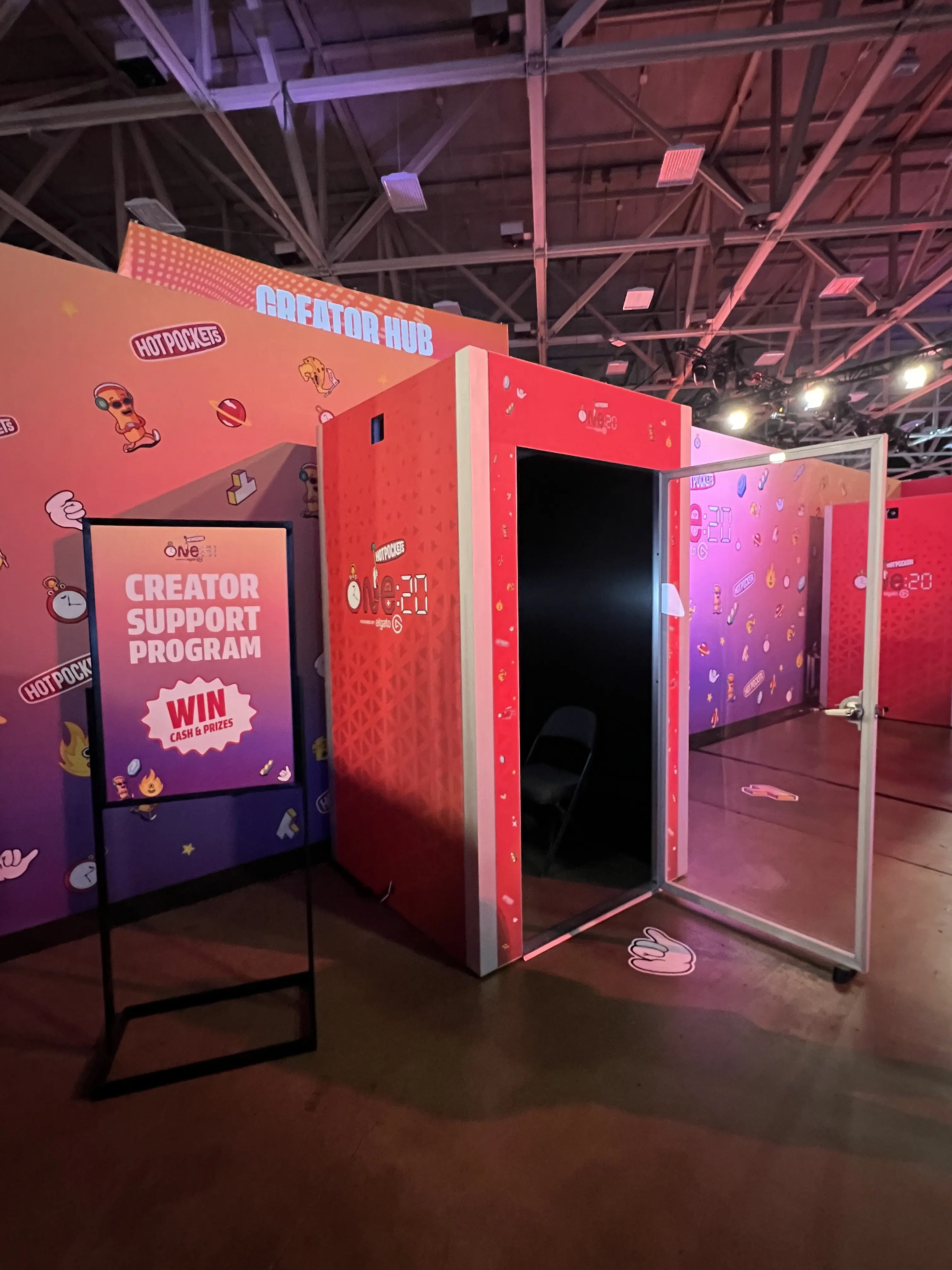
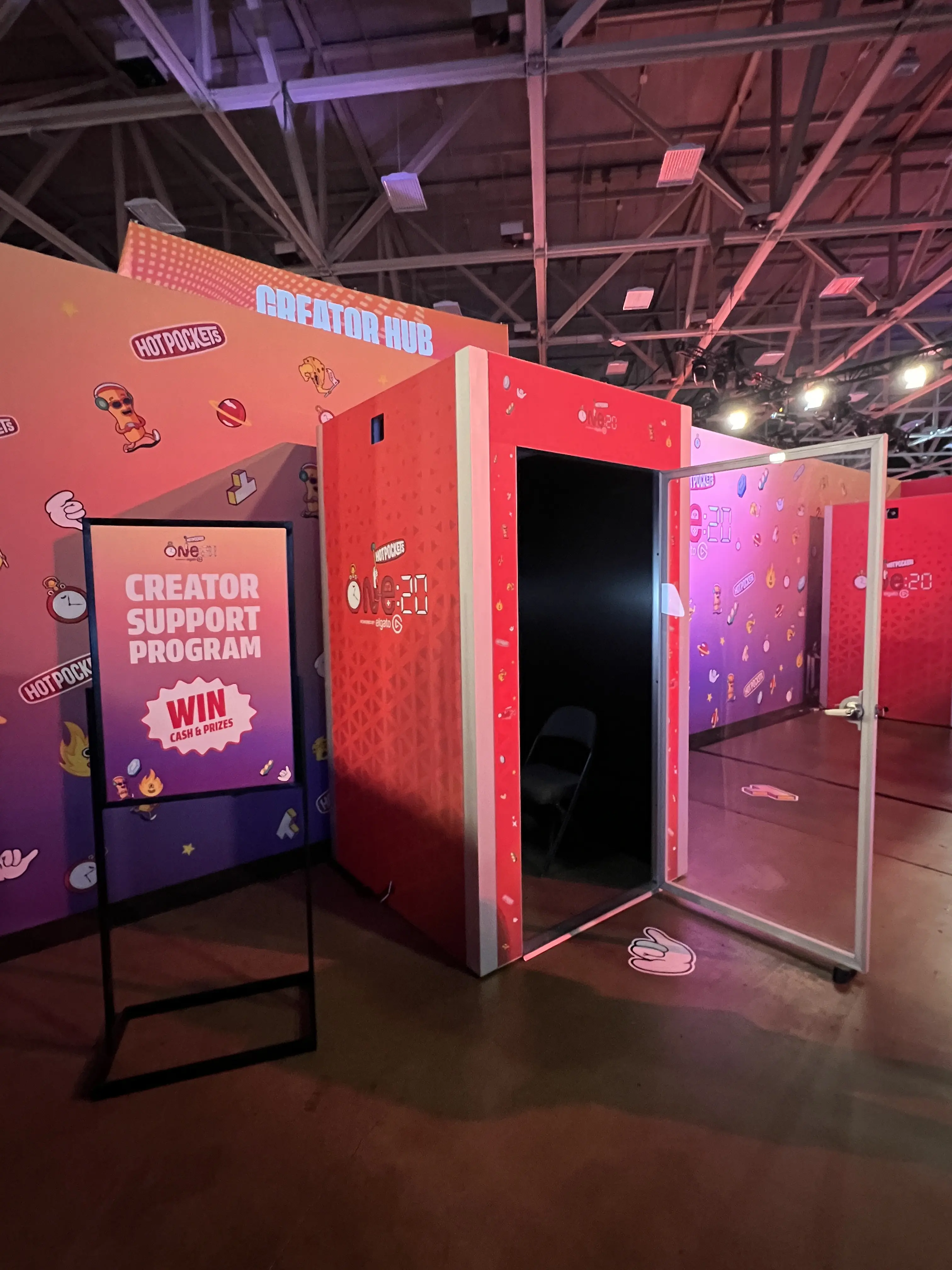
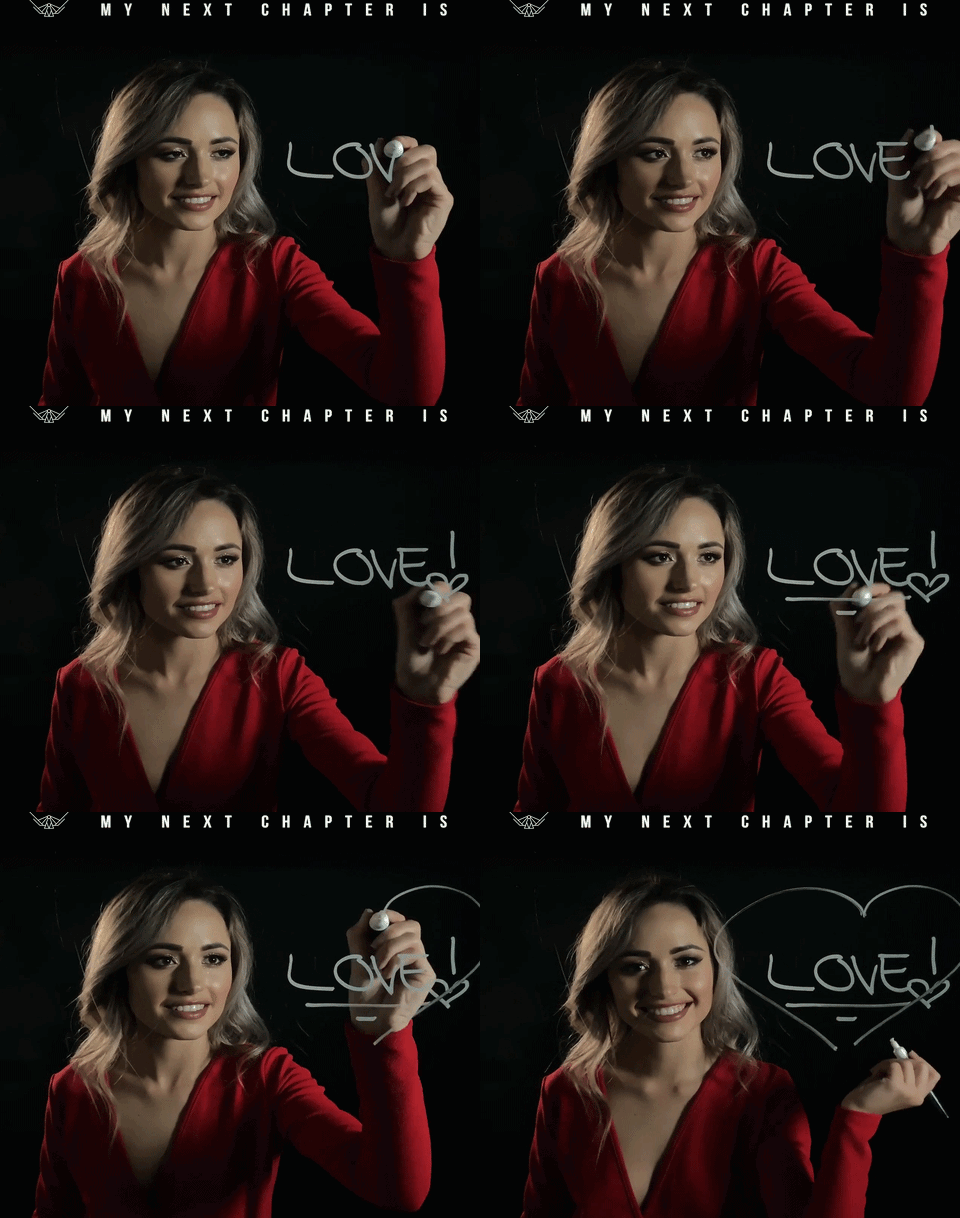
Most booth formats exist to give a guest something to take home. The Testimonial Video Booth exists to give your team something to take home instead — usable, on-brand video content, captured live and delivered edited before the event is even over. It borrows its format from the reality-TV confessional: a semi-private booth, a set of prompts on screen, and a guest talking directly to camera at their own pace, without a host standing over their shoulder shaping the answer.
Why an unscripted answer is worth more than a scripted one
The credibility gap between what a brand says about itself and what someone else says about it is well documented at this point: independent research consistently finds that the large majority of consumers trust another customer's words over a brand's marketing copy, and that testimonial video specifically drives measurable lifts in on-site conversion when it's added to a landing page or checkout flow. The mechanism is simple — people can tell the difference between a line written by a copywriter and a sentence someone said out loud, unprompted, because they meant it.
A confessional-style booth is built to protect that difference. Guests answer at their own pace, without a producer feeding them lines, which is exactly what makes the footage usable afterward instead of feeling like an ad.
Pipeline one: customer content for marketing
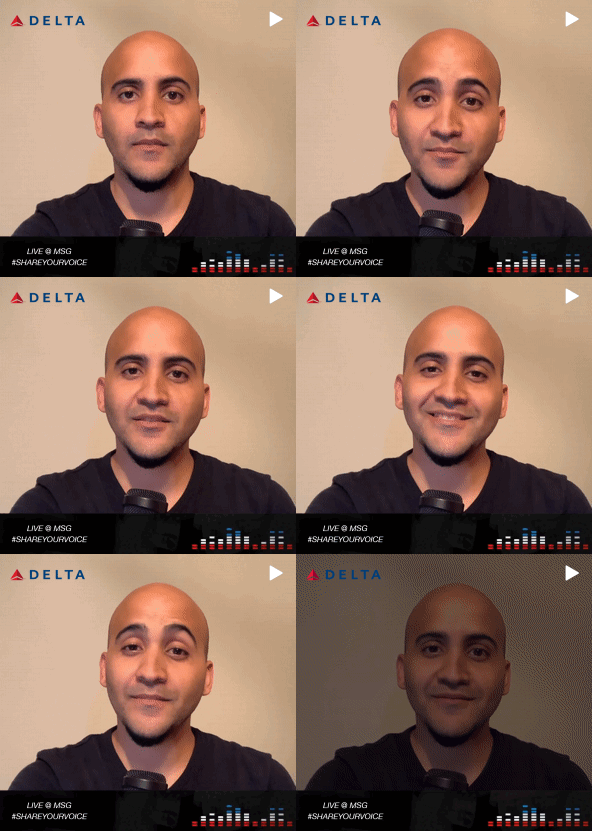
Point the booth at your customers or event attendees and you walk away with a stack of real reactions, in their own words, about your product, your brand, or the experience they just had — the exact kind of asset performance marketing teams are usually stuck buying from a studio or scraping together from old social posts. Because the questions are written to your campaign objectives ahead of time, the responses come back organized around the specific claims or themes your team actually needs to support, rather than a pile of generic praise you have to sort through later.
Pipeline two: employee content for recruiting and culture
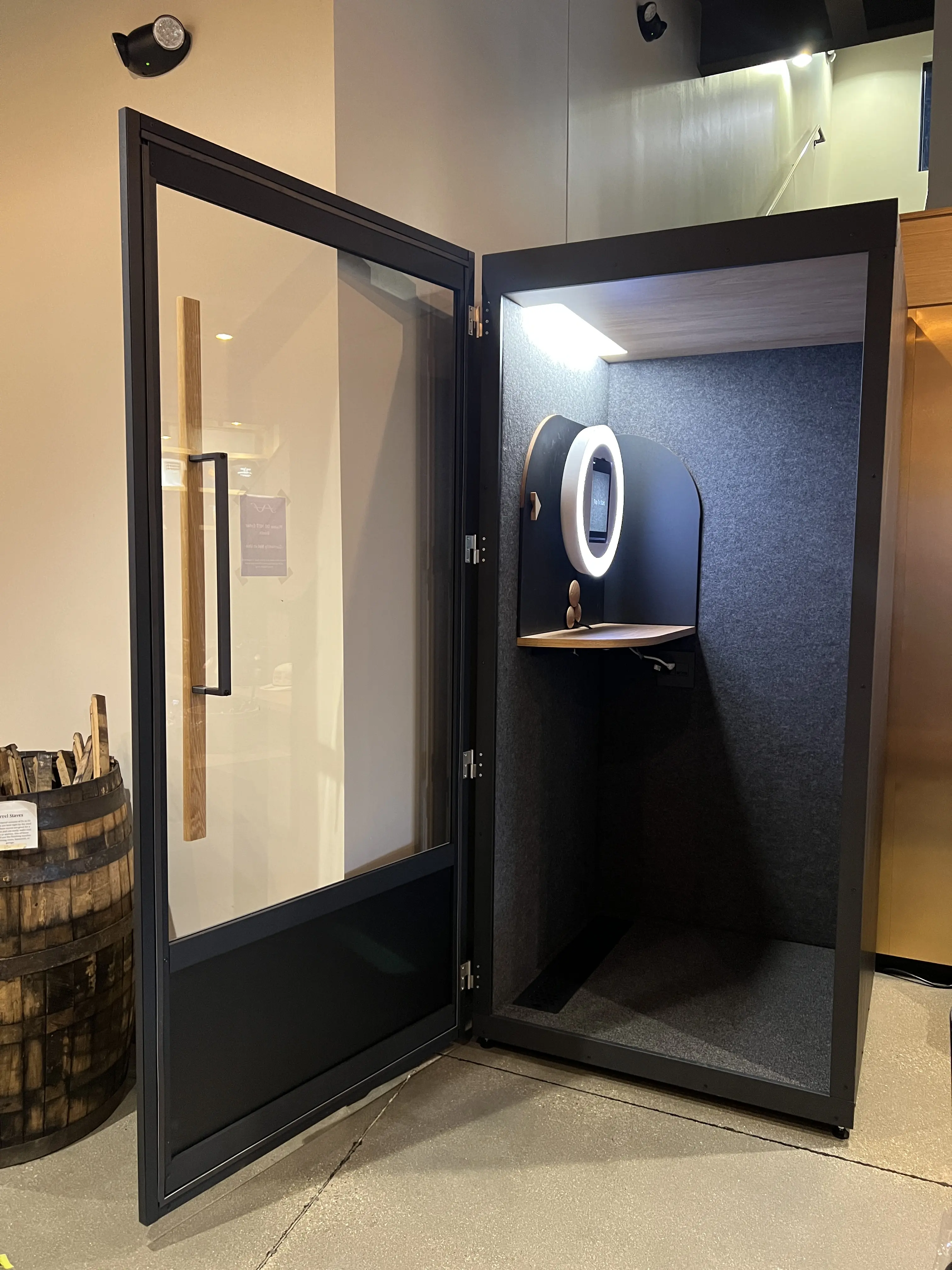
Run the exact same booth at an internal event, all-hands, or company offsite, and it becomes a recruiting and culture asset instead. A candidate deciding between two offers trusts a current employee's unscripted answer about what the job is actually like far more than a paragraph on a careers page, for the same reason a shopper trusts a stranger's review over an ad. The hard part has always been production — most companies can't get a dozen employees to sit for good lighting, good audio, and an on-message answer without a professional crew and a full day of scheduling. A staffed booth at an event you're already running solves the scheduling problem for free: your team is already in the building.
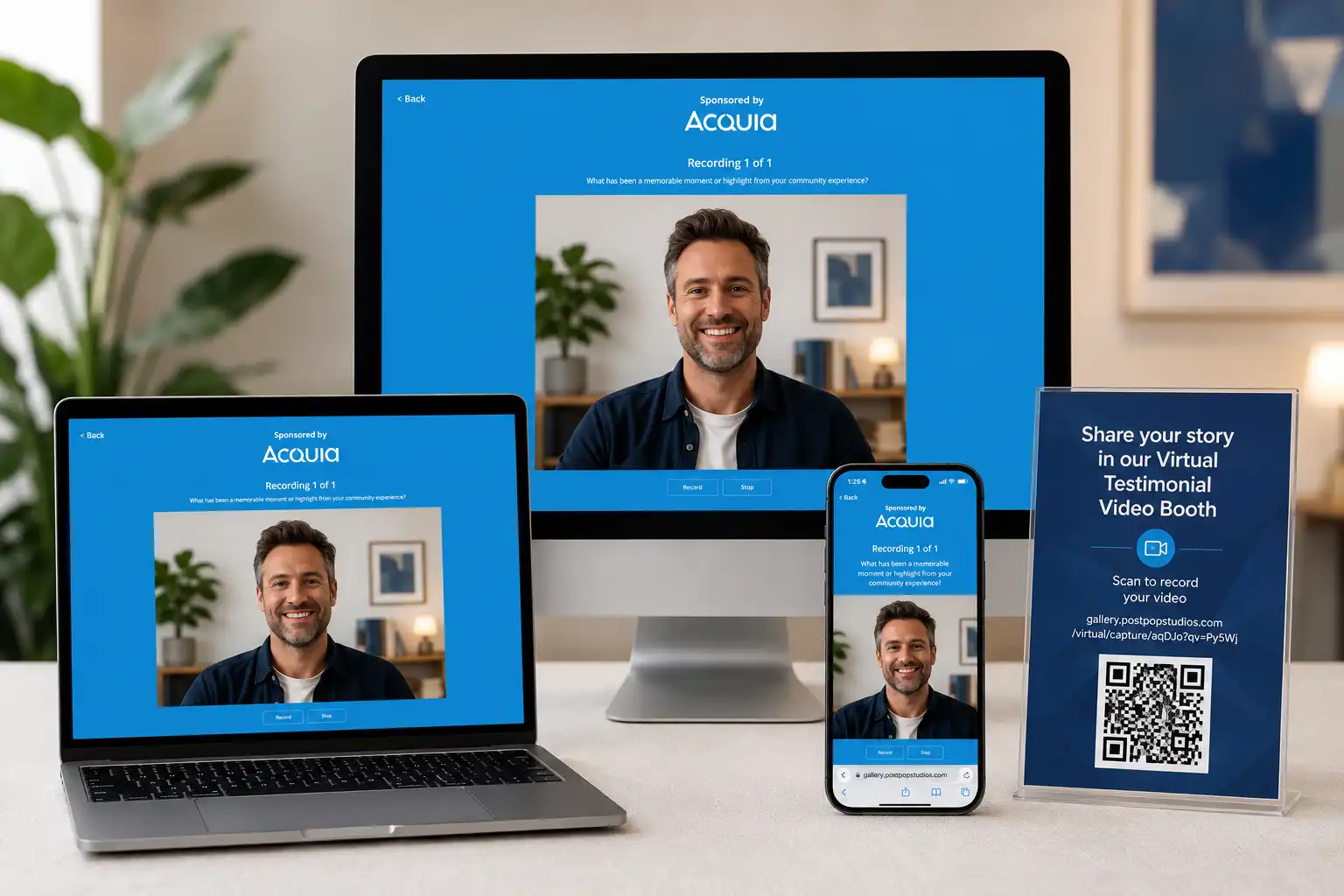
No app, no line: the same booth, on a guest's own device
The confessional format doesn't require a physical enclosure at all. We also run a web-based version of the same guided testimonial software, accessible by simply scanning a QR code or opening a link — no app download, no waiting for a kiosk to free up. Guests answer the same branded prompts on their own phone or laptop, whether they're standing at your event or logging in from somewhere else entirely.
That second part is the bigger unlock. Because the experience lives on the web instead of inside a piece of hardware, it isn't limited to people who were physically in the room. A QR code on a signature, an email footer, or a post-event follow-up can pull in testimonials from customers who never attended, employees working remote, or alumni scattered across time zones — the same guided question flow and branded delivery, collected asynchronously instead of all in one afternoon.
That reach matters most for teams that are decentralized to begin with. A company with people spread across offices, countries, or fully remote from day one never gets a single moment where everyone is in the same room for a physical booth to capture. The web-based version solves that directly — send the link out during a virtual all-hands, embed it in an internal newsletter, or drop the QR code into a Slack channel or company intranet, and you collect the same branded, on-message video responses from a distributed workforce that a physical booth could only ever get from whoever happened to be at headquarters that day.
You can see a live example of the web-based capture flow here.
Choosing between a staffed booth and the web-based version
The two aren't competing options so much as two ends of the same tool. A staffed, on-site booth is still the better call when production value matters most — proper lighting, clean audio, and someone there to help a guest who freezes up mid-answer produce a noticeably more finished clip than a guest's own phone camera in a loud hallway. The web-based version earns its keep on reach and flexibility: run it alongside a physical booth to catch overflow during a rush, hand it to guests who'd rather skip the line, or send it out entirely on its own when there's no event at all — just a campaign, a customer list, and a link, or a global team that was never going to be in one place regardless.
What to plan for
- Footprint: 8ft x 8ft to 10ft x 10ft typical for the staffed booth version, and a quieter zone away from stages or speakers matters more here than for any other format — audio quality is the whole product.
- Throughput: plan around 2 minutes per guest since the value is in a complete, thoughtful answer, not speed.
- Access: run it as a staffed physical booth, a self-serve kiosk, or a pure web/QR flow — or combine more than one at the same event.
- Reach: the web/QR version works independent of location, time zone, or event date, which matters for decentralized, global, or remote-first teams you could never get in one room.
- Ownership: you own both the raw footage and the edited clips, with release consent collected as part of the flow.
- Question design: we write the prompt set to your specific campaign or research goals ahead of time, whether that's product feedback, event sentiment, or "what's it like to work here."
Most activations give a guest a reason to remember your booth. This one gives your marketing and recruiting teams a reason to keep using the footage long after the event wraps, whether that footage was captured in a branded booth, on a guest's own phone halfway across the country, or from a remote employee who's never set foot in your office. See how it fits alongside our other formats in the full Activation Library.
latest news
Related Post




%20Instagram%20Art%20Mural%20At%20Event.gif)

Keep Connetcted


© 2026 Post Pop Studios LLC
All Rights Reserved
