

Find us on Instagram


Join our subscribers list to get the latest news, updates and special offers.
AR Mirror Photo Booths: The Interactive Format Bridging Live Events, Retail, and Museums
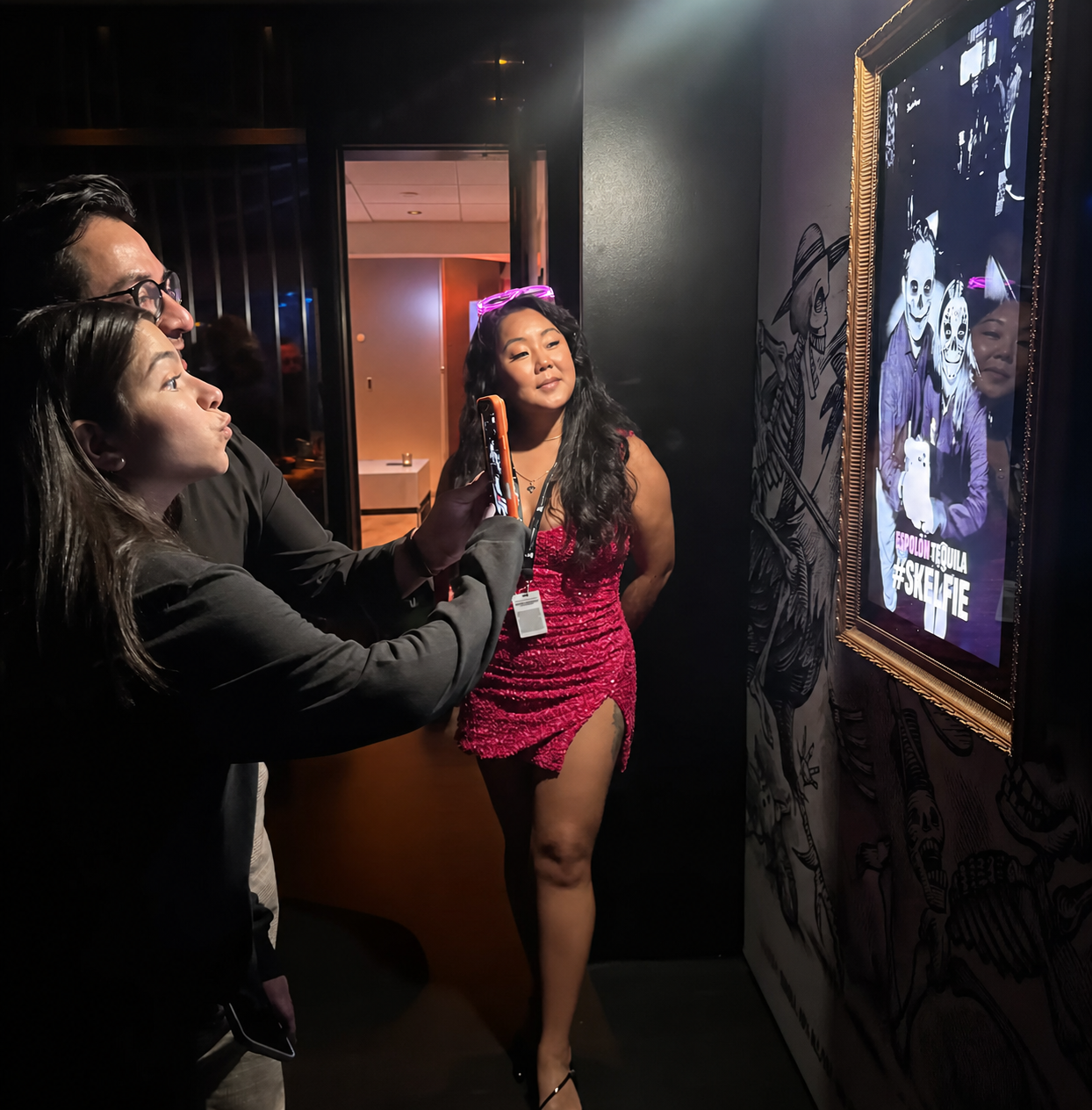
An AR mirror photo booth is a full-length display that reads a guest's reflection in real time and layers digital effects, garments, characters, or brand graphics onto it as they move, with no headset and no app to download. Because the transformation happens live and keeps happening for as long as the guest stands there, the format does three different jobs for three different budgets: a one-night activation at a launch or trade show, an always-on fixture inside a retail store, and a permanent interactive installation inside a museum or cultural space.
How the mirror actually works
The mechanic is simple to experience even though the tracking underneath it isn't:
- A guest stands in front of the mirror.
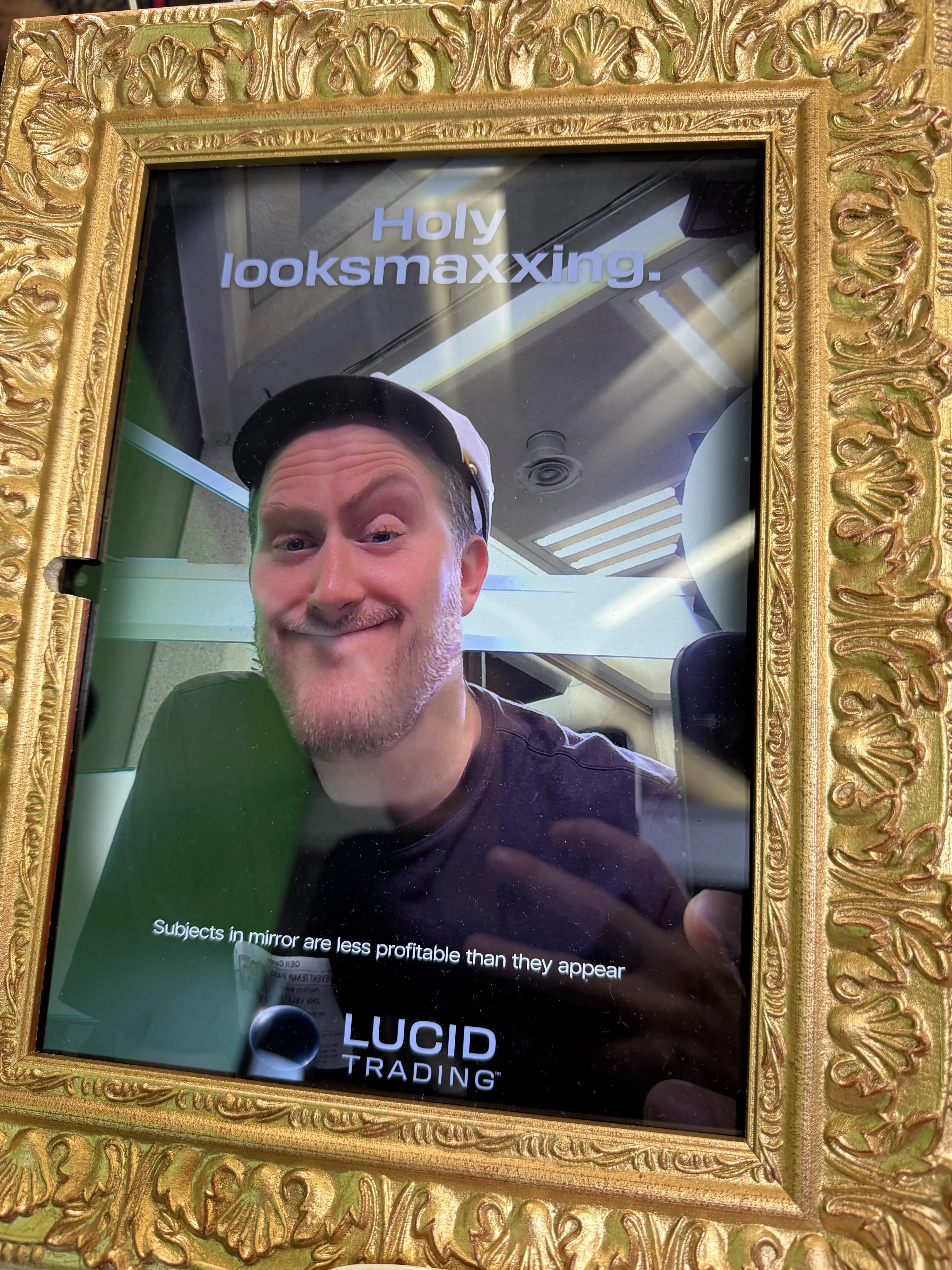
- Their reflection transforms in real time with brand-built AR effects.
- As they move, the effects track them, so the experience holds up whether they're posing still or moving through the frame.
- Guests capture the mirror on their own phones, or the booth triggers an automatic capture sequence and delivers it by text.
Why brands book it for live activations
Most photo booth formats are built around a single decisive moment: pose, capture, done. An AR mirror inverts that. Because the reflection keeps reacting as long as someone stands in front of it, guests tend to linger and experiment rather than take one shot and walk away, and that dwell time in front of a fully branded surface is a large part of what makes the format work for activation ROI. It also scales down the awkwardness of "performing" for a photo — there's no shutter moment to brace for, so guests who'd normally skip a photo booth line will often stop and play with a mirror for a minute anyway. That makes it a strong fit for product launches, retail pop-ups, trade show booths, and brand takeovers where the goal is sustained engagement with a space, not just a stream of shareable photos.
Permanent retail installations: the conversion case
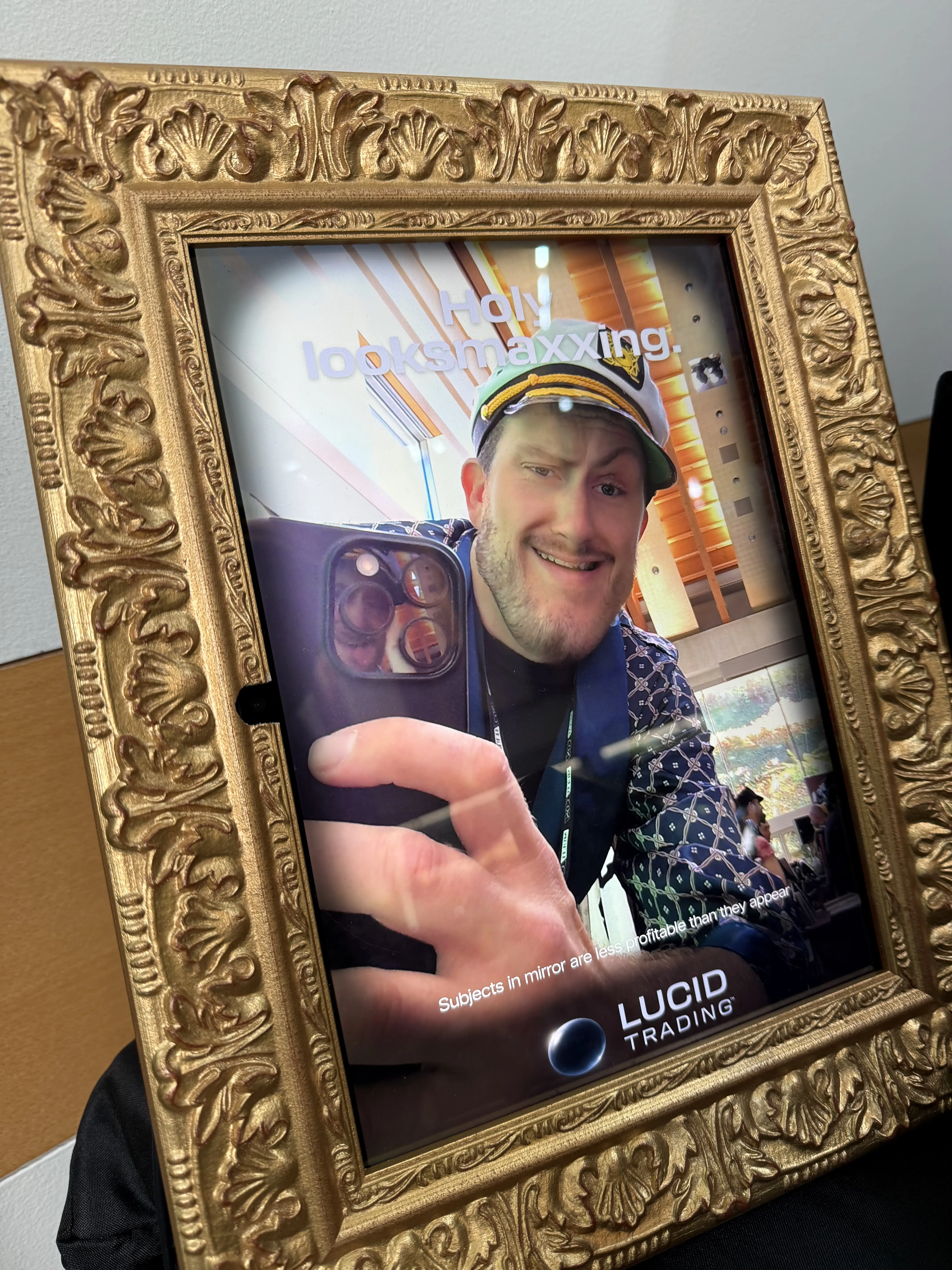
The same live-reflection mechanic that works for a one-night activation holds up as a fixture a store keeps running every day, most commonly as a virtual try-on mirror for apparel, beauty, or eyewear. The retail data behind virtual try-on backs this up directly: research compiled by DressX on AI-driven virtual try-on found that shoppers who used a try-on experience converted at roughly 50% higher rates than those who didn't, with view-to-cart conversion improving from about 4% to 11% and view-to-purchase nearly doubling. Some of the highest-performing implementations saw conversion increase by as much as 10x, and try-on users were roughly three times more likely to add an item to cart after roughly seven times more product views. Return engagement told a similar story: 30 days after first use, retention among try-on users sat around 44%, against roughly 1% for shoppers who never used it. For a retail brand deciding whether an AR mirror is worth a permanent footprint instead of a one-time rental, that's the number that matters — it's a fixture that keeps earning its floor space after the launch event is long over.
Permanent museum and cultural installations: the engagement case
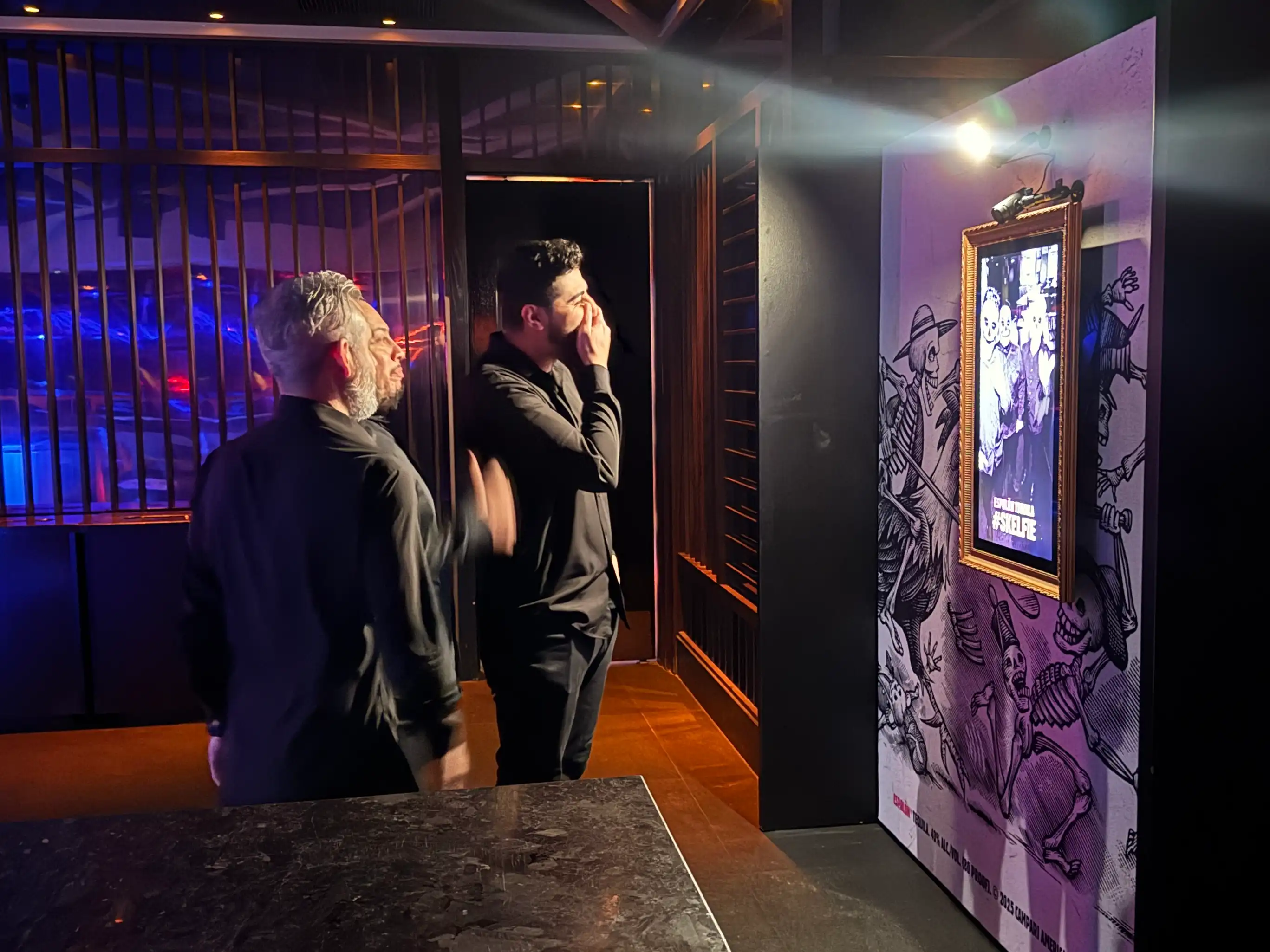
Museums and cultural venues have been adopting AR mirrors and related reflection-based interactives for a related but distinct reason: dwell time in front of the piece itself. Coverage from MuseumNext on augmented reality in museums cites a widely referenced case from the Art Gallery of Ontario, where the average visitor spent barely over two seconds looking at a given artwork before an AR layer was introduced, after which the large majority of visitors reported feeling genuinely engaged with the piece. Other institutions cited in that same coverage have used AR and mixed-reality mirrors and displays to let visitors see themselves alongside historical figures, endangered species, or extinct animals reconstructed in three dimensions, and to turn a passive gallery wall into something a visitor interacts with rather than walks past. For a museum or brand-sponsored cultural space, an AR mirror offers the same core benefit as a gallery AR layer: it turns a few seconds of glance-and-move-on into a minute or more of active attention, which is the metric most exhibit designers are actually trying to move.
What to plan for
- Footprint: roughly 8ft x 8ft up to 10ft x 10ft for a typical setup, and it scales to fit a tighter retail or lobby space if needed.
- Content lead time: custom AR effects, 3D objects, and animations built around your products or characters take longer to produce than a static overlay, so brief the creative early.
- Power and internet: a stable connection keeps the real-time tracking and any text-delivery capture running without lag.
- Branding surface: the mirror surround and frame, plus any advertisement loops shown between sessions, are additional places to reinforce the brand beyond the AR effect itself.
- Format fit: for a single-night activation, a rental with a staffed attendant covers it; for retail or museum use, plan for the installation as a fixture with its own maintenance and content-refresh cadence.
Common questions
Do guests need to download an app to use an AR mirror photo booth?
No. The AR effects run on the mirror's own display, and guests capture the result on their own phone or receive it by text — there's nothing to install.
Can guests try on products virtually through the mirror?
Yes. Virtual try-on is one of the strongest use cases for this format, particularly for retail, beauty, and eyewear brands looking to let shoppers preview a product before they commit to it.
How much space does an AR mirror photo booth need?
Most setups run roughly 8ft x 8ft to 10ft x 10ft, though the footprint scales down for tighter retail or lobby installations.
Whether it's booked for a single activation or installed as a permanent fixture, the AR mirror works because it replaces a single photo moment with an ongoing one. See the full AR Mirror Photo Booth page for specs and customization options, or browse the rest of the Activation Library for other formats.
latest news
Related Post




%20Instagram%20Art%20Mural%20At%20Event.gif)

Keep Connected


© 2026 Post Pop Studios LLC
All Rights Reserved
