

Find us on Instagram


Join our subscribers list to get the latest news, updates and special offers.
Cinema Robot Photo Booths: The Slow-Motion Video Format Turning Guests Into Movie Stars
August 20, 2026
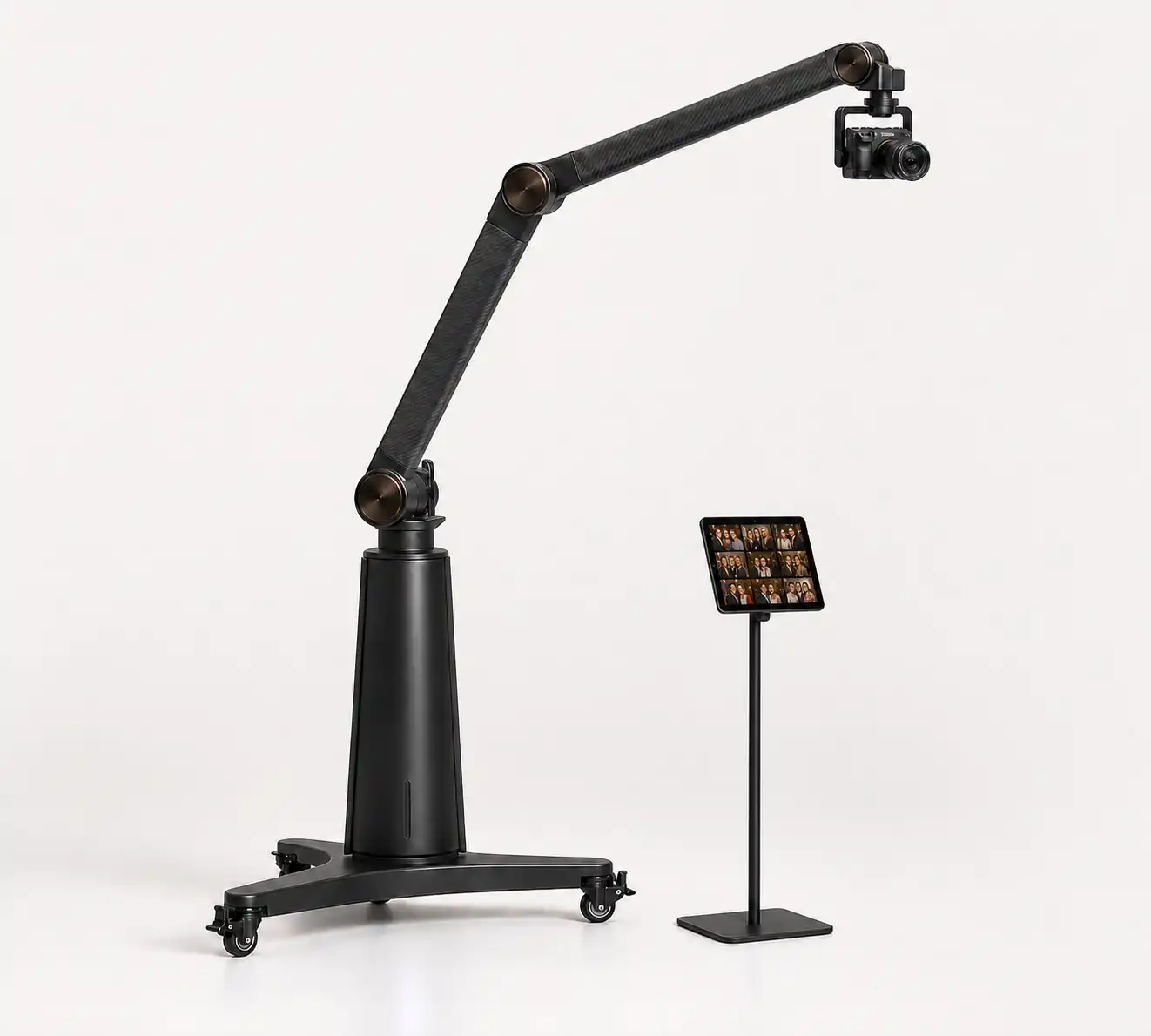
A cinema robot photo booth uses a robotic camera arm that sweeps a pre-programmed path around a guest at speed, capturing high-frame-rate footage that's automatically edited into a cinematic slow-motion clip within minutes. It's the same rig you've watched sweep around actors on red carpets and awards stages, scaled down and branded for a trade show floor, product launch, or gala.
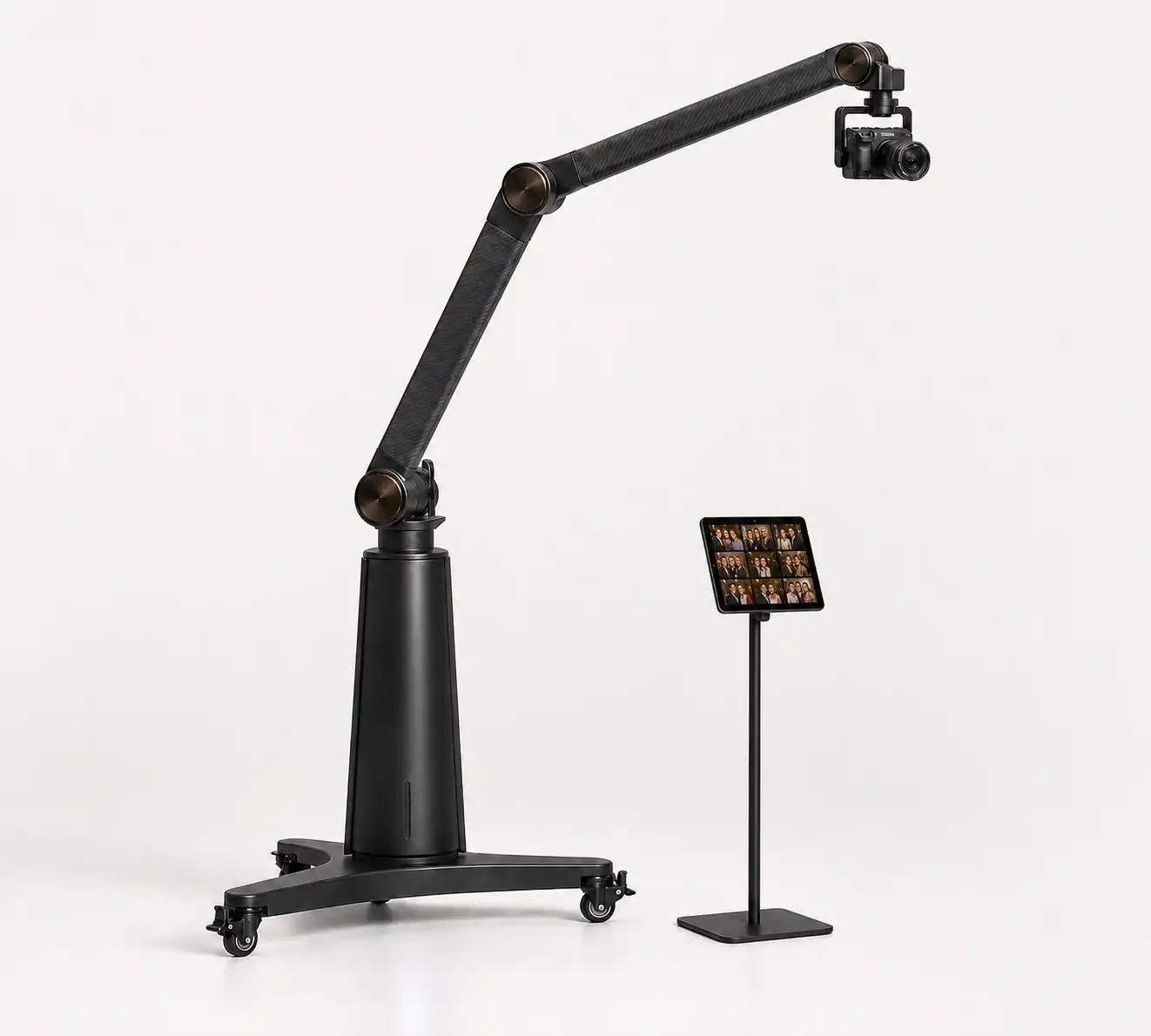
How the mechanic actually works
A guest steps onto a marked spot and holds a simple pose. The robotic arm then sweeps a pre-programmed path around them at speed — low, high, circling, diving, whatever path was set up ahead of time — while the camera shoots at a high frame rate. Software immediately edits the raw footage into a slow-motion clip with color grading and music, and the finished video lands on the guest's phone by text within minutes. The guest barely has to do anything; the robot and the edit supply the drama.
Why brands are booking it beyond the red carpet
Because the sweep is robotic and pre-programmed rather than hand-operated, the movement is identical from the first guest of the day to the four-hundredth — a human camera operator's energy and precision drift over a long shift, but the arm's path doesn't. That consistency is a big part of why the format has become a fixture at award shows and press lines in the first place, and it's exactly what a brand activation needs when a booth has to hold up for six straight hours of foot traffic.
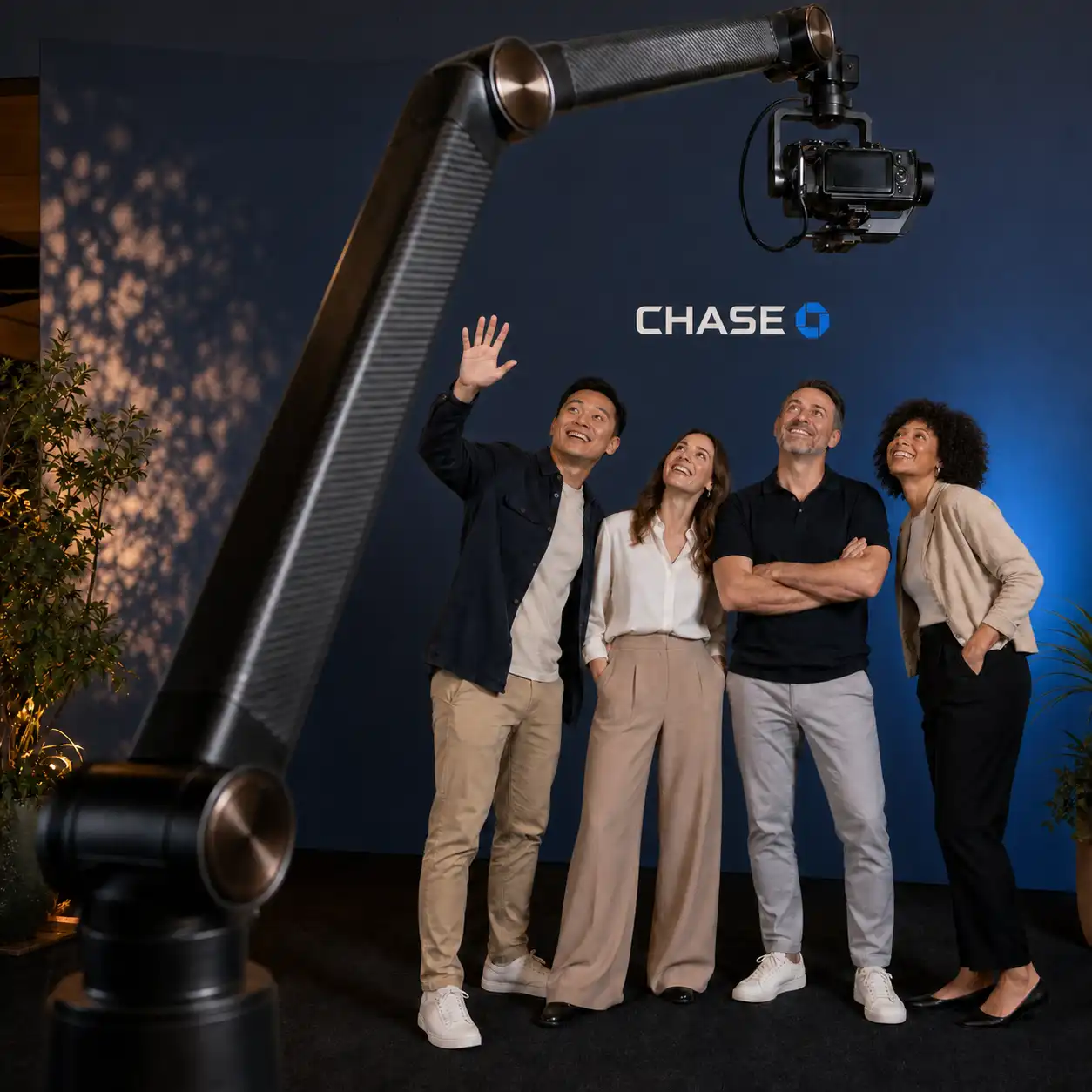
There's also a broader shift behind it: 2026 experiential marketing guidance increasingly treats the physical event itself as a content engine, not just a one-day experience — brands are building dedicated capture zones and real-time editing into activations specifically to manufacture a "hero moment" built for social amplification rather than leaving content creation to whatever guests happen to shoot on their own phones. A cinema robot booth is close to a purpose-built version of that idea: it exists almost entirely to generate one polished, shareable clip per guest.
Why the format performs so well on social
The clips a cinema robot produces are short by design, usually just a few seconds of dramatic slow motion, which lines up with where content performance actually is right now. Marketers rank short-form video as the top ROI-driving content format overall, ahead of both long-form video and live streaming, and videos under a minute hold engagement above 50% on average — well above what longer content manages. A cinema robot clip isn't competing for a guest's editing time or effort either: it arrives already finished, at the exact length and pacing that performs best on the platforms guests are actually going to post it to.
How it's different from a standard video or 360 booth
A 360 booth moves a single camera around a guest over several seconds at normal speed, which produces a smooth orbiting shot. A cinema robot booth is built for a different effect entirely: a fast, wide-ranging sweep captured at a high frame rate specifically so it can be slowed down into something that reads as cinematic rather than just circular. Most setups also offer multiple pre-programmed paths to choose from, plus built-in color grading and branded intro/outro frames, so the finished clip looks like a produced piece rather than a raw camera pass.
Where it fits best
- Product launches that want one unmistakable hero moment to build a launch reel around.
- Award shows, galas, and black-tie events where the red-carpet framing is already the natural fit.
- Trade show booths that need a visual draw dramatic enough to pull foot traffic from three aisles over.
- Fashion, beauty, and lifestyle activations where a guest looking and feeling their best on camera is the whole point.
What to plan for
- Footprint: the arm needs clearance to move through its full path, so plan for a larger dedicated area than a standard photo booth — roughly 10ft x 10ft to 15ft x 15ft depending on the paths programmed.
- Throughput: each guest or small group takes about a minute to a minute and a half once you include posing and playback, so staff the line accordingly for high-traffic events.
- Branding: path selection, color grading, and intro/outro frames are all customizable, so the finished clip can carry your campaign identity without looking like a generic effect.
Common questions
Do guests need to know how to pose for it?
No. The robotic sweep and the slow-motion edit do the dramatic work automatically — a simple, confident stance is all a guest needs to bring.
Is this the same as a 360 photo booth?
No. A 360 booth captures a smooth, normal-speed orbit; a cinema robot booth captures a fast sweep at a high frame rate built specifically for a slow-motion, cinematic result.
Can the output be branded for a specific campaign?
Yes. Camera paths, color grading, and intro/outro frames can all be set up ahead of time to match a brand or campaign identity.
The format works because it borrows a mechanic guests already recognize as glamorous and hands it to them for a few seconds — no styling, no crew, no red carpet required. See it alongside our other formats in the full Activation Library, or check out the Cinema Robot activation page directly.
latest news
Related Post




%20Instagram%20Art%20Mural%20At%20Event.gif)

Keep Connected


© 2026 Post Pop Studios LLC
All Rights Reserved
